%20scale(0.85)%20translate(-33%20-32)'%3e%3cpolygon%20points='19,38%2033,34%2047,38%2033,42'%20fill='%23101E38'/%3e%3cpolygon%20points='19,32%2033,28%2047,32%2033,36'%20fill='%230F9E97'/%3e%3cpolygon%20points='19,26%2033,22%2047,26%2033,30'%20fill='%23101E38'/%3e%3c/g%3e%3c/svg%3e)
Someone in your business is doing this right now
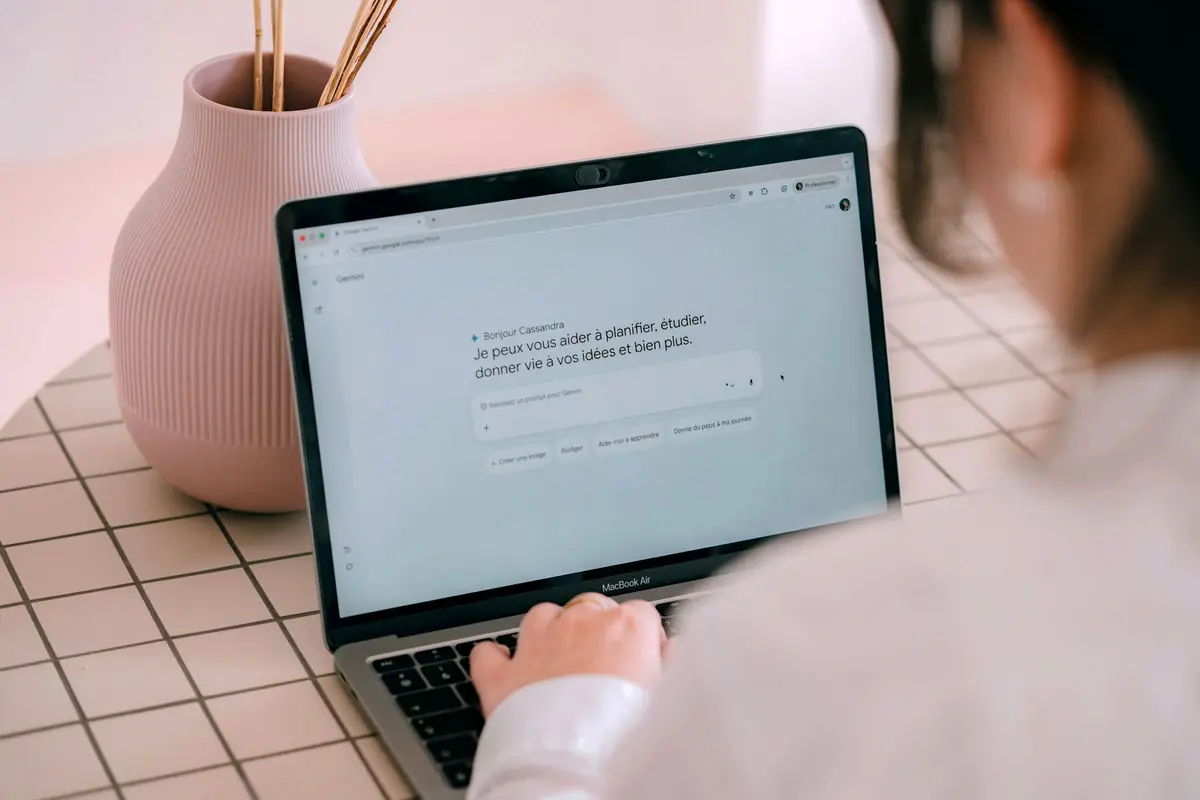
Somewhere in your business today, someone pasted a customer email, a spreadsheet or a draft contract into an AI tool that nobody approved. They were not being careless. They were trying to get their work done faster, with the tool they already use at home.
On 7 September 2026, the UK’s National Cyber Security Centre published guidance on exactly this, and gave it a name: shadow AI. It is a short read, and a sensible one. But it is written for cyber security professionals and large organisations, and in our view the businesses with the most to gain from reading it are the ones least likely to see it.
What the NCSC actually said
The NCSC defines shadow AI as “the use of AI technology which isn’t captured in an organisation’s approved systems and processes”. It is a form of shadow IT: the familiar problem of staff using software the business does not know about, now with a much more capable tool at the centre of it.
The guidance points to one study in which nearly three-quarters of employees (71%) reported using AI tools that had not been approved by their employer. Whatever the exact figure in your own business, the direction is not in doubt, and the NCSC expects the trend to strengthen as AI becomes cheaper and easier to reach.
Its explanation of why this happens is the most useful part. Policies and guidance “have not always developed at the same pace” as the technology, and where security policies cannot meet business needs, employees adopt new AI services before the organisation has had time to assess them. Just as important is what it does not say. The NCSC is explicit that it is not recommending people stop using AI.
Why this matters more for a small business
A large organisation usually has a security team, an approved AI tool with business-grade data terms, and someone whose job is to notice when data starts leaving through a new route. Most small and mid-sized businesses have none of those. There is no approved tool, so every tool is unapproved. There is no policy, so nobody knows where the line is. And there is nobody watching, so the first sign of a problem is often the problem itself.
The stakes are not abstract. The data most likely to be pasted into an AI tool is exactly the data a small business can least afford to lose control of: customer details, pricing, contracts, staff records. Where that includes personal data, your UK GDPR obligations do not pause because the tool was convenient.
The three risks, in plain English
Sensitive information gets exposed. Giving an unapproved AI tool access to company or customer data, in the NCSC’s words, likely increases the risk of data breaches, intellectual property loss and failure to meet regulatory requirements.
You lose sight of where your data went. When someone pastes information into a consumer AI service, it may be stored, retained or used to improve that service, outside your security arrangements, unless specific privacy controls are in place. Most people never check which of those apply to the free version they are using.
Attackers get a new way in. This is the risk that will grow fastest. AI agents, tools that can act on your behalf by reading your inbox, working in your files or connecting to other systems, are complex software with their own vulnerabilities. If an attacker exploits one, the NCSC notes, they gain the same access the agent had. An agent connected to everything on a whim is a very generous gift to whoever compromises it.
What most coverage missed
Most of the reaction to the guidance has treated shadow AI as a discipline problem: staff breaking the rules, to be solved with a ban and a stern email. Read the guidance closely and the NCSC says something different. Shadow AI is a supply problem. People reach for unapproved tools because the approved route either does not exist or does not meet their needs.
That changes what works. A ban with no alternative simply moves the activity somewhere you can see even less of it, onto personal phones and personal accounts. The NCSC’s own recommendation is to build a positive security culture where people can say which tools they use and why, and to give them a secure alternative. Organisations that understand why people use shadow AI, it says, are better placed to identify the risks, provide secure alternatives and support innovation safely.
Shadow AI is what happens when the need arrives before the policy does. Banning the tool does not remove the need.
Agents raise the stakes
The guidance refers readers to an earlier NCSC blog, published in May, on adopting agentic AI carefully. Its advice is worth repeating for any business tempted to connect an AI assistant to its email, calendar or file storage: start small, apply your existing security controls from the start, and plan for failure.
Two lines from it deserve a place on the wall. Give agents “only the minimum access they need, for the shortest time required”. And: “If you cannot understand, monitor or contain an agent’s actions, it is not ready for deployment.” Neither requires a security team. Both require someone to decide, deliberately, what an agent is allowed to touch.
What to do on Monday
- Ask, without blame. Send your team one short question: which AI tools do you use for work, and what for? You cannot manage what you do not know, and the NCSC is clear that open communication beats enforcement.
- Choose one approved tool and make it easy to get. Check its business terms: whether your inputs are used to train the service, how long they are kept and where they are stored.
- Write a one-page rule for what must never go into any AI tool: customer personal data, passwords and access details, and anything you would not send to a stranger.
- Review which apps have been connected to your email, calendar and file storage, and remove any that nobody can explain.
- For any AI agent, grant the minimum access for the shortest time. If you cannot see what it is doing, do not switch it on.
- Put a date in the diary three months from now to repeat the question. The tools will have changed by then.
Knowing where your data goes, and whether the tools people depend on are ones you would choose, is part of what our technology audit covers across security and business systems. See how the audit works
Sources
- The hidden risks of shadow AI (opens in a new tab)National Cyber Security Centre, 7 September 2026
- NCSC Warns Shadow AI Is Creating New Security Blind Spots for UK Businesses (opens in a new tab)IT Security Guru, 9 September 2026
- Thinking carefully before adopting agentic AI (opens in a new tab)National Cyber Security Centre, 15 May 2026
- Shadow IT guidance (opens in a new tab)National Cyber Security Centre